What Actually Changes at the End of September
The UK's steel trade measure replaced the old safeguard on 1 July 2026. It covers 20 categories of steel goods that can also be produced in the UK, it allocates tariff-free volume quarterly on a first-come, first-served basis through HMRC, and anything landing outside the available quota attracts a 50% out-of-quota duty. We covered the shape of the regime when it came in, in UK steel tariffs — July 2026.
What is arriving now is the regime's first quarter boundary, and two separate things land on it at once.
The transitional exemption ends. When the measure was announced, the Department for Business and Trade carved out goods already under contract. Material under a contract signed before 14 March 2026 was fully exempt from the 50% out-of-quota duty when imported between 1 July and 30 September 2026 — and, importantly, those imports did not count against quarter one's quota either. That exemption runs out on 30 September 2026. From 1 October, contract date is irrelevant: everything in a covered category either fits inside the available quota or pays 50%.
Quarter two opens. The quarterly allocation resets on 1 October, reopening balances on lines that closed during the summer. Quarter two runs to 31 December 2026, and unused country or residual volume can roll forward into the following quarter — but not into the next quota year.
Quarter One Showed How Fast a Quota Can Close
"The quota opens on 1 October" sounds like a formality. Quarter one demonstrated that it is not.
Take Category 12B, non-alloy merchant bars and light sections — hot-rolled black bar, flats, squares and light sections in carbon grades. Its residual quota, order number 058624, reached critical status on 21 July 2026 and was exhausted with effect from 27 July. That is day 27 of a 92-day quarter. Buyers who went looking for that volume in August or September found the door shut and the choice reduced to paying 50% or buying from stock already in the country.
It was not the only line to close early. Several residual ("other countries") allocations ran out during quarter one:
| Category / product | Allocation | Reported quarter volume | Status in Q1 |
|---|---|---|---|
| 12B — non-alloy merchant bars & light sections | Residual (other countries) | 1,135 t | Exhausted 27 July 2026 |
| Rebar | Residual (other countries) | 17,093 t | Exhausted |
| Other welded pipes | Residual (other countries) | 4,081 t | Exhausted |
| 25A — large welded pipes | EU | 1,766 t | Exhausted |
Which Category Your Bar Actually Sits In
This is where engineering buyers get caught, because the categories are drawn around product form, not around grade. The same steel can sit in two different quota lines depending on how it was finished. The old Category 12 has been split into 12A for alloy merchant bars and light sections and 12B for non-alloy, and a separate category covers cold finished bar regardless of whether it is carbon or alloy.
| Category | Covers | Typical engineering grades |
|---|---|---|
| 12A | Alloy merchant bars and light sections | Hot-rolled black bar in EN19 (708M40), EN24 (817M40), EN16, EN26 |
| 12B | Non-alloy merchant bars and light sections | Hot-rolled black bar in EN8 (080M40), EN3B, EN9, S355 J2 |
| 14 | Stainless bars and light sections | Stainless bar (added to scope in this measure) |
| 27 | Non-alloy and other alloy cold finished bars | Bright drawn, turned and ground bar in EN1A (230M07), EN1A Pb, EN8, EN19, EN24 |
Read those two rows together and the trap is obvious. EN8 bought as black round bar is a Category 12B question. The same EN8 bought as bright round bar is a Category 27 question, against a different quota line with its own balance and its own closing date. A buyer who has been tracking one has not been tracking the other.
Cold Finished Bar Is Inside the Measure for the First Time
Category 27 — non-alloy and other alloy cold finished bars — is new to the scope of UK steel trade measures. It was added alongside stainless bars and light sections when the measure replaced the old safeguard. Bright bar was simply not a quota product before; now it is.
That matters more than it sounds, because bright bar is the default buy for a large part of British precision engineering. Drawn, turned and ground bar is what feeds CNC turning, and the free-cutting grades in particular — EN1A and EN1A Pb — are bought by the tonne by shops that have never had to ask an importer for an order reference number in their lives. For those buyers, this is a new exposure appearing in the middle of an existing supply chain, not a change to a process they already manage.
What It Means If You Buy From Stock
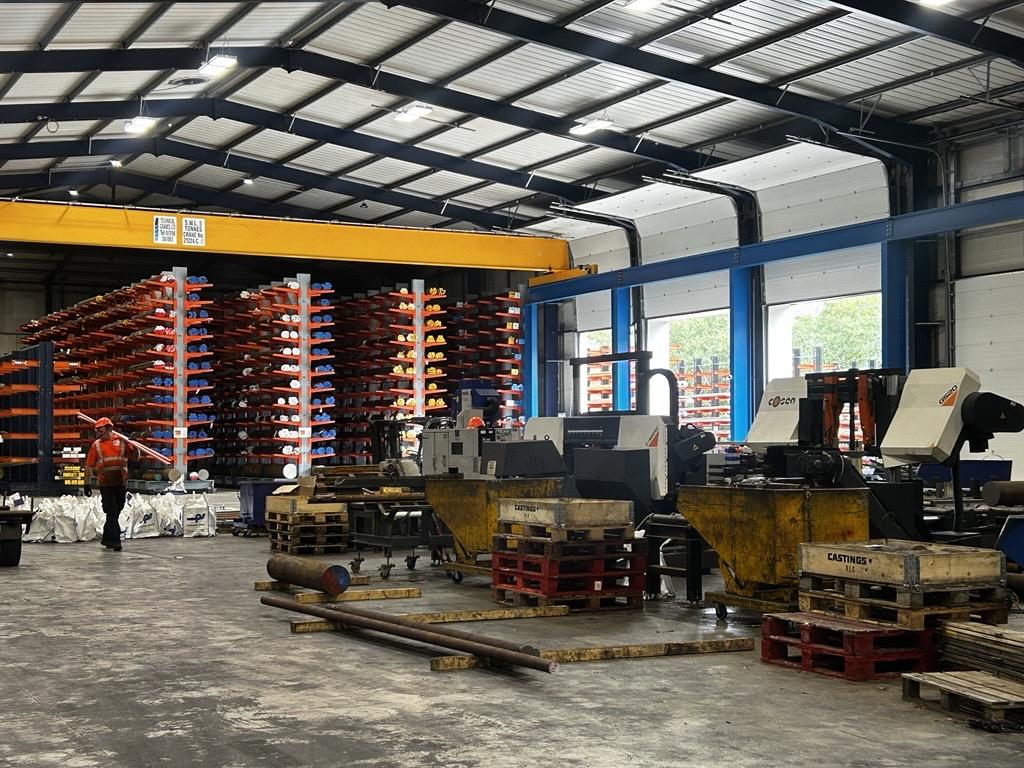
Parkside buys from UK mills and from European mills we have dealt with for years, and we are not a direct importer from the quota-affected origins. That does not make the measure irrelevant to us or to our customers — when import routes narrow, demand moves to material already in the country, and the pressure shows up in availability and lead times rather than in quota paperwork. What it does mean is that the 50% duty question does not sit on the customer's order. Bar bought from stock at Sherwood Park has already cleared whatever it had to clear; the price we quote is the price, and the date we promise is a date we control because the steel is on our racks and our own fleet delivers it.
The practical value of that during a quota squeeze is boring and considerable: no minimum order, so you are not forced into mill quantities to get a price; cut to length from stock across 13 saws from 10mm to 600mm diameter, so you buy the material you machine rather than the length the mill sells; and EN 10204 certification with every consignment, which is also what the EU's melt-and-pour declaration needs from 1 October. The same date, a different rule, and the same answer — know where your material came from and keep the certificate that proves it.
Need engineering bar cut to length from UK stock, with certification, for a quarter-two delivery? Tell us the grade, size and quantity and we will confirm availability.
► Request a QuoteWhat to Do Before 1 October
- Ask whether anything you buy has been riding the exemption. Put the question to your supplier in writing: were any of our deliveries since July covered by a pre-14 March 2026 contract? If the answer is yes, that cover ends on 30 September and the price needs re-basing.
- Work out which category each product form sits in. Black bar and bright bar in the same grade are different quota lines. List what you buy by form, not by grade, and you will see your real exposure.
- Get your quarter-two requirement in early. Quota is first-come, first-served and quarter one saw a merchant bar line close on day 27. If a direct import is part of your plan for October to December, the first week of October is when to move, not November.
- Ask for the order reference number. Any quote that relies on quota volume should be able to name the quota order number it will be cleared against. If nobody can, the 50% duty is an open risk on that order.
- Price the stockholder option properly. For anything you machine in modest quantities, compare the landed import price including the quota risk against buying cut-to-length from UK stock. Once duty exposure is in the comparison, the arithmetic often changes.
If you supply into automotive, oil and gas, defence or hydraulics, there is a second reason to sort this out early: those programmes tend to run on fixed schedules with penalties attached, and a material line that closes mid-quarter is a schedule problem long before it is a cost problem. Where a job depends on a ground finish, our note on bright bar tolerances sets out which finish actually holds which band, so you are not buying a tighter — and now quota-covered — product than the part needs.
Our View
The measure itself is not the story this week; it has been in force since July. The story is that the padding has come off. Quarter one was cushioned by an exemption for contracts already signed, and the exemption also kept that material off the quota, which flattered the balances. From 1 October both of those props are gone at the same moment: every import counts against the quota, and the quota is smaller than the volumes UK engineering has been used to.
Nothing about that is a reason to panic, and it is not an argument that everything must now be bought from UK stock. It is an argument for knowing which of the two systems each line of your material actually depends on — quota or stock — and not discovering the answer from a 50% duty line on an invoice. If you are not sure where your bar sits, or you want a stock price to compare against an import quote, call us and ask. We would rather answer that question in September than in January.
Speak to the Parkside Team
Our sales team is on the phone Mon-Fri 08:00-17:00. No minimum order. Next-day available on most lines.