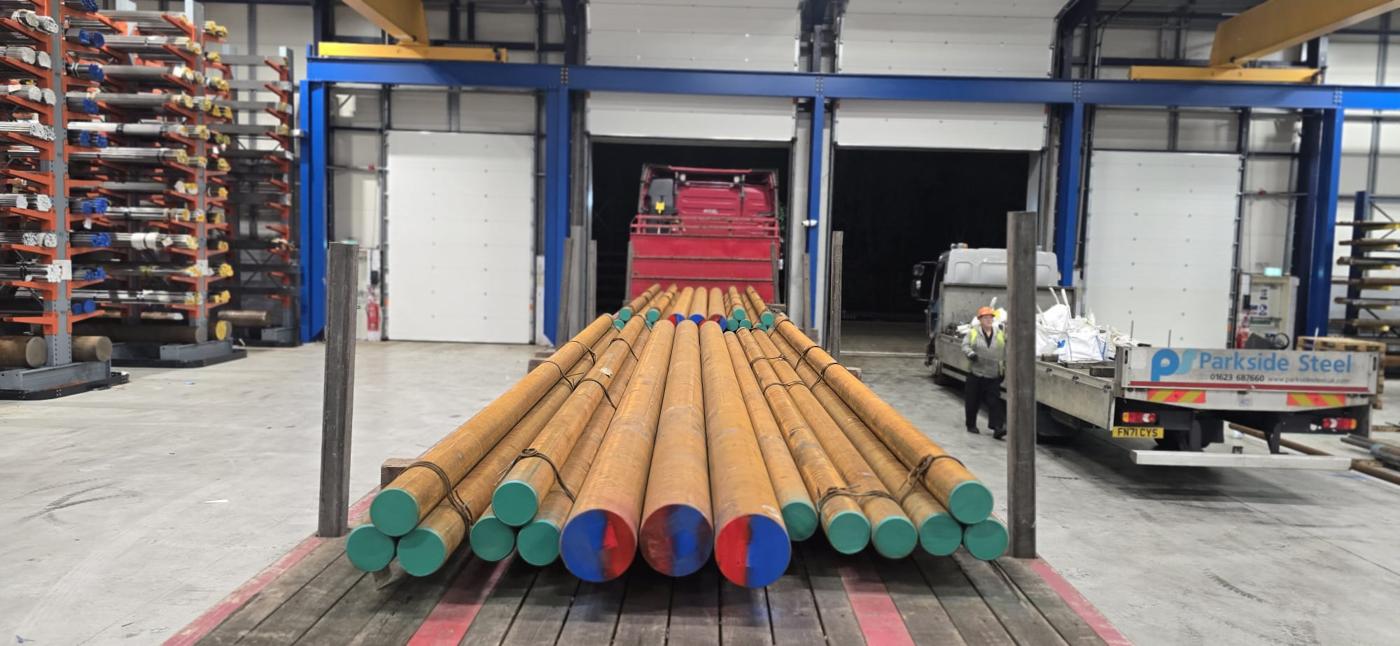
As outlined in our July 2026 overview of UK CBAM, the mechanism applies a carbon price to carbon-intensive imports to prevent carbon leakage. Unlike the EU’s framework, the UK scheme has no transitional reporting-only phase — financial liability begins on day one. Ten weeks out, the question for a procurement team is no longer what CBAM is, but which of these rules touch their own supply chain.
Confirmed Scope, Commodity Codes and the De Minimis Threshold
Under Schedule 16 of the Finance Act 2026, iron and steel imports are in scope, covering primary, semi-finished and finished mill products across Chapters 72 and 73.
In scope: engineering bar stock under CN codes 7214, 7215 and 7228; flat-rolled products (7208, 7209, 7225); tubes and pipes (7304, 7306); and standard fasteners (7318).
Out of scope: downstream engineered machinery and fabricated assemblies falling outside Chapters 72 and 73. Note that scope is defined positively by the commodity codes listed in Schedule 16 — anything not listed is outside by omission rather than by exclusion.
The statutory de minimis registration threshold is £50,000 per importer, tested two ways: a 12-month backward-looking test and a 30-day forward-looking test. It is measured on the customs value of CBAM-covered goods, and the regime applies uniformly across the UK, including Northern Ireland.
Default Values Versus Actual Verified Emissions
There are two routes to accounting for embodied emissions: government-published default values, or actual verified emissions data from the overseas installation that made the material.
Where actual emissions are used, the data must be certified by an independent accredited verifier. The same applies to a Carbon Pricing Verification Form when claiming Carbon Price Relief for a carbon price already paid in the country of origin. Where actual data is unavailable, the published default values apply.
This is the part most likely to catch a direct importer out. Obtaining verified emissions data from a mill is a lead-time item, not a paperwork exercise at the border.
How the Rate Is Calculated, and When You Pay
The rate is set quarterly. Under Regulation 4 of SI 2026/809, it equals the average UK ETS auction clearing price for the preceding quarter, multiplied by a Sector Factor — the proportion of emissions for which domestic producers do not receive free allowances under the UK ETS.
Worked through with an illustrative UK ETS price of £58.15/tCO2e and a Sector Factor of 0.167, reflecting an indicative 83.3% free allocation, the steel rate lands at roughly £9.69 per tCO2e. These are illustrative figures: the binding rate for each quarter follows the actual preceding auction prices.
| Parameter | Confirmed rule | Statutory basis |
|---|---|---|
| Implementation date | 1 January 2027, with no transitional reporting phase | Part 5, Finance Act 2026 |
| Registration threshold | £50,000 imported value — 12-month and 30-day tests | Sch. 17 para 2, Finance Act 2026 |
| Return frequency | Quarterly accounting periods from day one | Sch. 17 para 6, Finance Act 2026 |
| First return due | 31 May 2027, covering Q1 2027 imports | Sch. 17 para 6, Finance Act 2026 |
| Non-compliance | Civil penalties and statutory offences | Sch. 17 & 18, Finance Act 2026 |
As at October 2026 there is no UK–EU ETS linkage agreement in force. EU-origin steel is fully subject to UK CBAM, with relief available only where an explicit carbon price can be proven to have been paid abroad.
Where Liability Actually Sits
Under Section 145 of the Finance Act 2026, liability rests with the importer of record — the party lodging the customs declaration. For a machine shop, fabricator or precision manufacturer buying steel from a UK stockholder, that draws a clear line: the buyer has no CBAM registration, reporting or return obligation.
CBAM also sits alongside the existing trade measures rather than replacing them. Because liability turns on non-preferential origin, documentation establishing the country of melt and pour matters for carbon accounting as well as for tariff classification and quota treatment.
Where Parkside Sits in This
Parkside Steel (Stockholders) Ltd has supplied engineering steel bar across the UK from Annesley, Nottinghamshire since 1977. We hold bright and black engineering bar in 25 grades — EN1A (230M07), EN1A Pb (230M07Pb), EN3B (070M20), EN8 (080M40), EN8D, EN8M (212A42), EN9, EN16, EN19 (708M40), EN24 (817M40), EN26, EN30B, EN31, EN36, EN36C, EN39B, EN40B, 8620, EN32M (210M15), BMS (080A15) and S355 J2, plus grey and ductile cast iron — with EN 10204 2.2, 3.1 and 3.2 inspection certificates available on request. We are ISO 9001 certified, FS 86692.
Parkside imports engineering bar directly, including from origins subject to UK quotas, as every UK stockholder does. Where we import, we are the importer of record, so a customer buying from stock is not. The carbon cost of imported material will reach the market through pricing in the usual way; the filing obligation does not sit with the buyer.
What to Do Before January
Three things worth settling in the next ten weeks:
1. Establish whether you are an importer of record. Review your purchasing channels and identify anything brought in under your own EORI number. If that crosses £50,000 on either the 12-month or the 30-day test, CBAM registration is yours, not your supplier’s.
2. If you import directly, start the emissions conversation now. Verified data has to come from the overseas installation through an accredited verifier. Defaulting to published values is permitted, but it is a decision to take deliberately rather than one to discover at the first return.
3. Know your origin documentation. Country of melt and pour already matters for quota and tariff treatment. It now matters for carbon accounting too, so the traceability you keep for one purpose serves the other.