Two Signals Pointing the Same Way
On 30 June 2026 the Government published its Defence Investment Plan (DIP), backed by £298 billion of defence funding over the next four years, including £15 billion of additional investment. It is a spending framework, not a single order — but its direction is clear: sustained, multi-year procurement of equipment, platforms and munitions, with an explicit push to route more of that money through British industry and, in particular, through small and medium-sized suppliers.
Roughly six weeks later, the monthly manufacturing data pointed the same way. The S&P Global UK Manufacturing PMI for July 2026 came in at 51.9 — a touch softer than June’s 52.5, but still firmly in expansion. Underneath the headline number, the detail mattered more: manufacturing output rose at its fastest pace in almost two years, new orders and new export business both accelerated, and backlogs of work rose for the first time in over four years. A rising backlog is a demand signal — it means orders are arriving faster than shops can clear them.
Neither of these is, on its own, a steel story. But both describe the same underlying condition: more work heading toward the UK’s machine shops, subcontract engineers and fabricators. And that work has to be cut from something.
Where the Defence Investment Plan Actually Lands
The parts of the DIP that matter most to a bar buyer are the ones about the supply chain, not the headline platforms. The Plan leans hard on widening the base of firms that do defence work — because at present only around 4% of Ministry of Defence contracts go directly to SMEs, despite roughly 12,000 SMEs already working in the sector.
| Measure | Detail |
|---|---|
| Published | 30 June 2026 |
| Total funding | ~£298 billion over four years (incl. £15bn additional) |
| SME spend target | £7.5 billion per year by 2028 |
| SME spending uplift | +50% by 2028 |
| Regional Defence Growth Deals | Five deals, £250 million over five years |
| Longer-term budget path | Core defence toward 3.5% of GDP by 2035 |
| Where the jobs sit | ~70% of defence industry jobs outside London & the South East |
Read that as a bar buyer and the picture is straightforward. A programme designed to pull more work toward regional SMEs is a programme designed to pull more work toward exactly the kind of business Parkside supplies every day: the CNC machine shop turning shafts and spindles, the subcontract engineer running a mixed order book, the fabricator on a Midlands trading estate. When those firms win more work, they buy more bar. The East Midlands — with 70% of defence jobs sitting outside London and the South East — is squarely inside that footprint.
The Grades Defence and Precision Work Actually Run
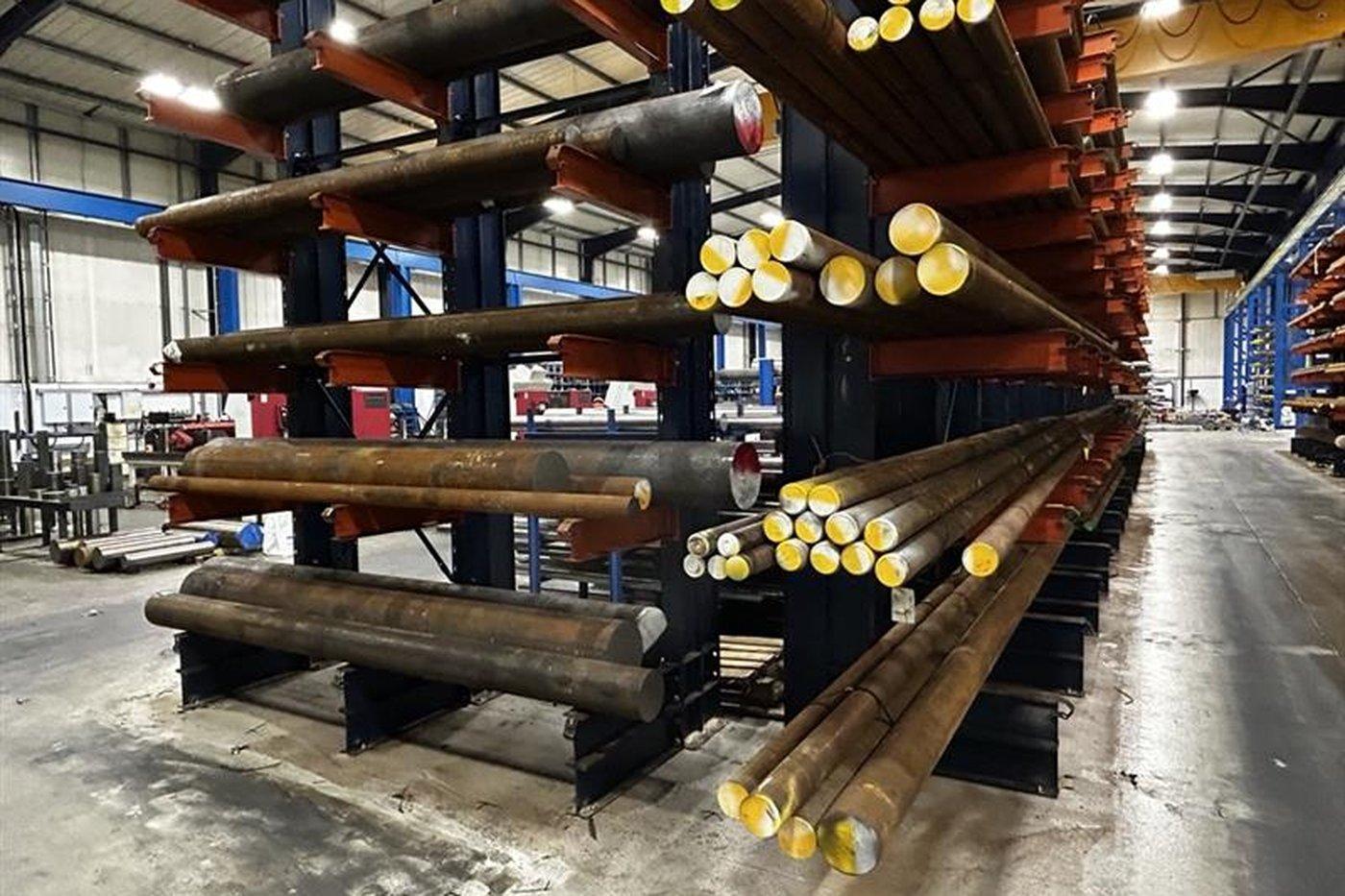
Defence, aerospace and the precision-engineering supply chain that feeds them do not run on mild steel. They run on higher-strength, heat-treatable and case-hardening alloy grades — the materials that hold a tolerance, take a load and survive a fatigue life. In practice that means a familiar shortlist:
- EN24 (817M40) — a nickel-chromium-molybdenum alloy supplied hardened and tempered, the default for highly stressed shafts, spindles, gears and load-bearing components where strength and toughness both matter.
- EN19 (708M40) — a chromium-molybdenum alloy widely used for shafts, axles, bolts and studs, and a common step down from EN24 where the very highest strength is not required.
- Case-hardening grades such as EN36 and 8620 for gears and components that need a hard, wear-resistant skin over a tough core.
- Free-cutting and general carbon grades — EN1A, EN8 — for the high-volume turned parts, fasteners and fittings that surround every major assembly.
Almost all of these are alloy or higher-specification carbon grades, and that matters for the next part of the story, because those are precisely the grades most exposed to the UK’s import position.
The Supply Catch: Rising Demand Meets Tighter Quotas
Here is the tension. The UK produces very little of its own engineering bar — dependency on imports for engineering-grade steel runs at around 90%, far higher than for the construction steels that dominate overall tonnage. Many alloy and free-cutting engineering grades are simply not rolled by UK mills at all, so imports are not a cost-saving option; they are the supply.
Into that import-reliant market landed the new steel safeguard regime on 1 July 2026. It cut the tariff-free import quota sharply (a reduction of around 51% against the previous safeguard, leaving a total of roughly 3.2 million tonnes) and raised the tariff on above-quota imports to 50%, up from 25%. Crucially, the quotas for alloy bar (Category 12A) were among those cut, and access is administered quarterly on a first-come, first-served basis. We set out the mechanics in our guide to the July 2026 steel safeguard quotas.
Why Lead Time, Not Price, Is the Real Risk
For a shop that has just won new work, the danger in a market like this is rarely that steel becomes unbuyable. It is that the specific grade, size and condition you need is not available the week the job is due — because a quota has filled, an import shipment has slipped, or a mill minimum makes a small parcel uneconomic to bring in. A late bar is a late part, and a late part on a defence or aerospace order is a missed slot on a schedule that does not flex.
This is where holding stock changes the maths. Material already on the ground in a UK warehouse — bought in ahead of the squeeze, certified, and ready to cut — is insulated from the quarter-by-quarter quota cycle. It is available on the day, at a known price, in the size you need, whether or not a quota is open that week.
Won new work and need to lock down the alloy bar for it? Send us the grades, sizes and volumes — we will tell you straight what we hold and when it ships.
► Request a QuoteWhat Should You Do Now?
- Separate your grades by exposure. Split the grades you buy into the widely UK/EU-produced ones (EN8, S355) and the more import-reliant alloy and free-cutting grades (EN24, EN19, volume EN1A). The second group is where quota tightening bites first — and where a defence or precision order is most likely to sit.
- Tie your material plan to your order book, not last year’s. If firming demand or a new defence-linked contract is lifting your volumes, size your steel buffer to the work you now expect, not the throughput you had six months ago.
- Ask suppliers the direct question. Is the grade you need in stock in the UK, or does it depend on an import against an open quota? A supplier who has to bring it in is exposed to the quarterly cycle in a way a stockholder is not.
- Hold a buffer on your steady alloy lines. For a predictable volume of a specific grade and size, a short buffer from a stocked UK supplier is cheap insurance against a mid-quarter quota squeeze or a slipped shipment.
- Keep the certificate in the loop. Defence and aerospace work lives on traceability. Whatever the origin, insist on a readable EN 10204 certificate tying each bar back to its cast — it is not optional paperwork, it is the audit trail.
Our View
The Defence Investment Plan is a genuine, multi-year signal that demand for precision-engineered components — and the alloy bar behind them — is set to firm, and the July manufacturing data suggests the order-book side of that is already moving. That is good news for the UK engineering base. But it arrives in the same summer as a tighter import regime on a grade mix that Britain barely produces for itself, and the two do not cancel out: more demand chasing a supply chain with less duty-free headroom tends to show up as longer lead times and firmer prices on exactly the alloy grades this work needs.
We have supplied engineering steel for nearly five decades, through booms, shortages and more trade regimes than we can count. The lesson is always the same: the buyers who ride these cycles most comfortably are the ones with a stocked, certified UK supplier at the end of the phone — not the ones chasing the cheapest import line the week a quota fills. If you want a plain read on how firming demand and the July quotas together affect the specific grades you buy, call us. That is exactly the conversation our sales team is good at.
Speak to the Parkside Team
Our sales team is on the phone Mon-Fri 08:00-17:00. No minimum order. Next-day available on most lines.