Grade Designations.
| BS EN 1561:2011 | EN-GJL-250 / EN-JL1040 |
| BS 1452:1990 (withdrawn) | Grade 250 |
| ASTM | A48 Class 40 |
| DIN | GG-25 / 0.6025 |
| JIS | FC250 |
Availability & Supply Condition.
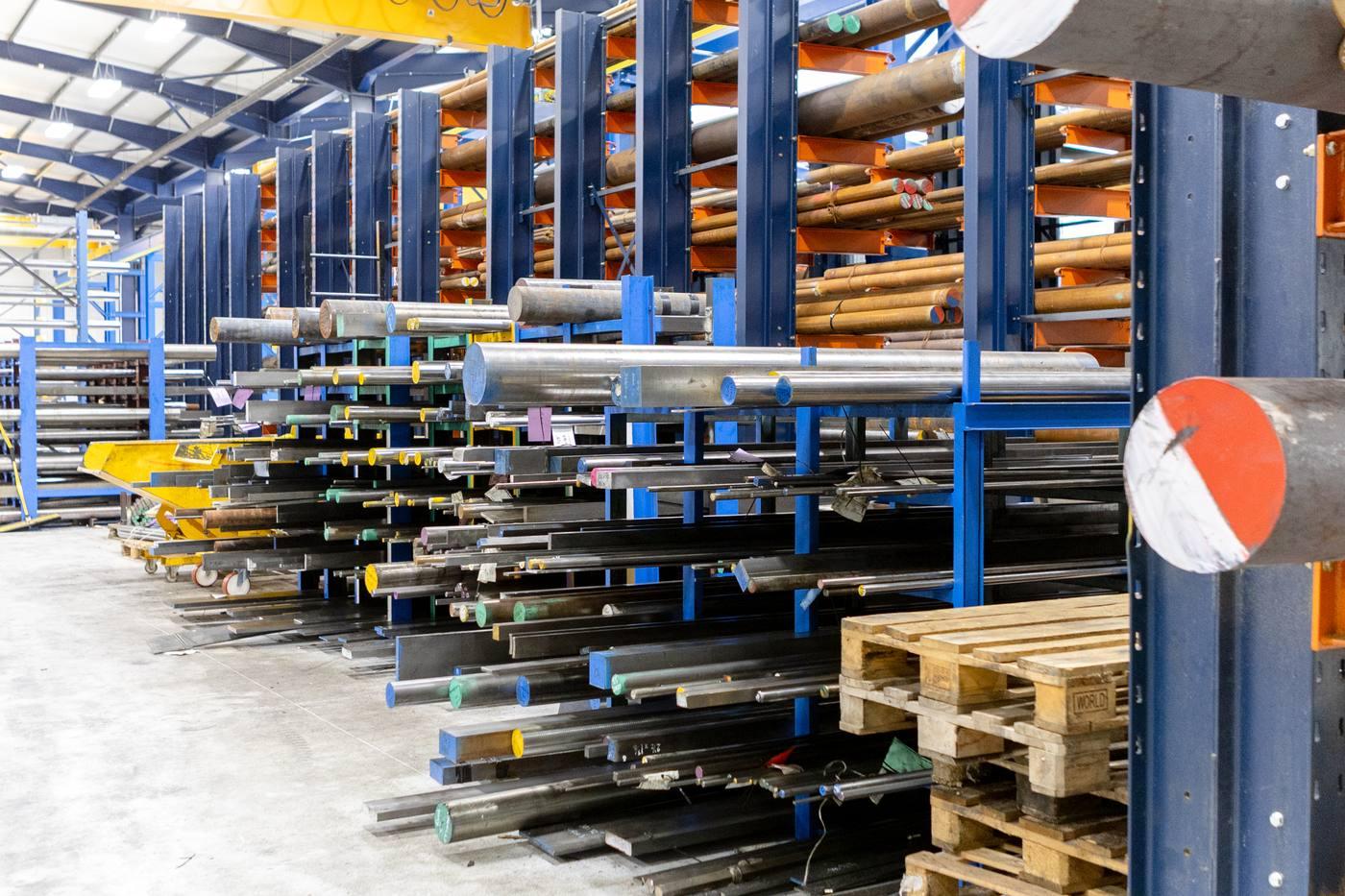
Cast and machined rounds: 25–400mm diameter. Cut lengths available from stock.
Supply condition: Cast and centreless ground or turned to close diameter tolerance. Supplied in the as-cast condition.
Cut to length from 1 piece — −0/+2mm standard tolerance — 2–3 day turnaround — Cutting service details ›
Chemical Analysis.
Values shown as percentages by weight (% wt). Values are ranges unless stated as maxima.
| Element | Typical Range (%) | Notes |
|---|---|---|
| Carbon (total) | 3.00–3.50 | Exists as graphite flakes |
| Silicon (Si) | 1.70–2.50 | Controls graphitisation |
| Manganese (Mn) | 0.50–0.90 | |
| Phosphorus (P) | 0.10–0.30 | |
| Sulphur (S) | 0.05–0.15 |
For full chemical analysis with heat number, request an EN 10204 3.1 material test certificate when ordering — available on all alloy grades. Certificate types explained ›
Mechanical Properties.
Values shown for standard supply condition. Properties vary by section size and heat treatment condition.
| Designation | Tensile Strength (N/mm²) | Compressive Strength (N/mm²) | Hardness (HB) | Machinability |
|---|---|---|---|---|
| EN-GJL-250 / BS Gr.250 | ~250 (min) | ~900 | 170–260 | Excellent |
Hardness values: see our hardness conversion table to convert between HRC, HB, HV and tensile strength.
Typical Applications.
- Bearing housings and bushes
- Slideways and guide surfaces — machine tools
- Machine beds, frames and bases
- Hydraulic and pneumatic valve bodies
- Pump bodies and covers
- Lathe chucks, faceplates and arbors
Key Benefits.
- Exceptional machinability — graphite lubricates the cut
- Excellent vibration and noise damping
- Good compressive strength for machine bases
- Self-lubricating surface for bearings and slideways
- Cost-effective for large machined components
Remarks & Guidance.
Cannot be welded by conventional methods — highly susceptible to cracking under tensile or impact loading. Never specify for components subject to shock loading or significant tensile stress. Stress-relief annealing at 500–600°C can reduce residual casting stresses in critical components. Cannot be through-hardened in the same way as steel.