📍 Byron House, 4 Willow Drive, Sherwood Park, Annesley, NG15 0DP
Mon–Fri 08:00–17:00 📞 01623 687 660 ✉ sales@parksidesteel.uk.com
Industry Grade Guide

Engineering Steel for
Agricultural Machinery.

Agricultural machinery is subjected to impact loading, abrasive wear from soil and crop material, and cyclic fatigue from continuous field operation. Components must resist wear without becoming brittle under shock loads — the opposite ends of the steel property spectrum, which means grade selection and heat treatment are both critical. Parkside Steel supplies agricultural manufacturers and repair workshops across the East Midlands, Lincolnshire, Yorkshire and East Anglia.

🌾
Sector Overview

What Agricultural Applications Demand from Steel Bar

Agricultural steel requirements split broadly into three categories: driveline components under torsional and impact load (PTO shafts, drive couplings, hubs); soil-engaging wear components that must resist abrasion (tines, shares, coulters, discs); and structural and fabricated parts that carry static and dynamic loads (axle beams, frames, mounting brackets).

Each category needs a different approach to grade and condition. Getting this wrong is expensive — a PTO shaft in the wrong grade breaks under field shock loads; a tine in underhardened steel wears out in a season instead of lasting three. We supply the grades and, through our cutting service, the exact lengths that agricultural workshops and OEM manufacturers need.
Key Grades

At a Glance.

Full grade list below ↓

PTO Shafts, Drive Couplings & Driveline

Power take-off shafts and agricultural driveline components are subject to high torque and impact loads — particularly when a tractor-mounted implement strikes a hidden obstruction at field speed. EN8 (080M40) in the normalised or hardened and tempered condition is the standard specification for PTO shafts and stub shafts where moderate toughness and strength are required.

For higher-torque applications — combine drivelines, large header drive shafts, telehandler driveline — EN19 (42CrMo4) provides greater strength and hardenability than EN8, particularly in sections above 40mm where EN8's hardenability begins to limit the through-hardness achievable.

Recommended Grades

Soil-Engaging Wear Components

EN9 (070M55) is the preferred grade for soil-engaging tools — its higher carbon content (nominally 0.55% C) gives significantly better wear resistance and achievable hardness after heat treatment than EN8. Used for tines, shares, subsoiler legs, press wheels and any component where abrasive wear is the primary failure mode.

The heat treatment sequence matters: normalise or anneal before forming and drilling, harden and temper after to achieve 40–50 HRC in the working zone. At this hardness the component resists abrasive wear while retaining sufficient toughness to survive field impact. Fully hardened to maximum HRC would give better wear but risk brittle fracture on stone strike.

Recommended Grades

Bearing Housings, Hubs & Wear Sleeves

Grey cast iron bar (EN-GJL-250) is the standard material for bearing housings, hub castings and wear sleeves in agricultural machinery — its self-lubricating graphite flakes, excellent compressive strength and vibration damping characteristics make it the natural choice for components in contact with rotating shafts. Machines directly to close tolerances from bar form.

Available in diameters from 25mm to 300mm — suitable for everything from small bearing housings in harvester conveyors to large hubs in trailer axles. Cut to length, deburr and machine to bore size — a straightforward process that repair workshops carry out daily.

Recommended Grades

Structural Fabrication & Axle Beams

S355 J2 is the most commonly specified structural grade for fabricated agricultural machinery frames, axle beams, headstock assemblies and chassis components. Its minimum 355 N/mm² yield strength (for sections to 16mm) and good weldability — using standard MIG/MMA processes — make it the natural upgrade from S275/mild steel for higher-stressed structural applications.

EN8 black round bar covers large-diameter axle and pivot applications where turned-to-size fabrication components are needed. Large-diameter black bar in S355 covers round hollow section applications for lifting attachments and booms.

Recommended Grades
All Grades for Agricultural Machinery

Recommended Grades — Full List.

Click any grade for full data sheet, chemical composition, mechanical properties and heat treatment guidance.

Not sure which grade is right? Call our sales team on 01623 687 660 — we can advise based on your component, loading and heat treatment requirements.

Common Questions

Frequently Asked.

EN8 (080M40) covers the majority of PTO shaft applications. For larger sections or higher-torque driveline use EN19 (42CrMo4). Both should be heat treated — EN8 normalised or hardened and tempered, EN19 quenched and tempered — to develop full strength before machining spline profiles.
EN9 (070M55) is the standard choice for tines, subsoiler legs and soil-engaging components where wear resistance is the priority. Harden and temper after forming to 40–50 HRC in the working zone. EN8 is suitable for lighter tine applications where cost is more important than maximum wear life.
Yes — we cut to any length from one piece with a standard tolerance of −0/+2mm. There is no minimum order and no minimum length charge. This makes us particularly useful for agricultural repair workshops that need replacement shafts or bearing sleeve blanks in non-standard sizes.
Explore Further

Related Industries.

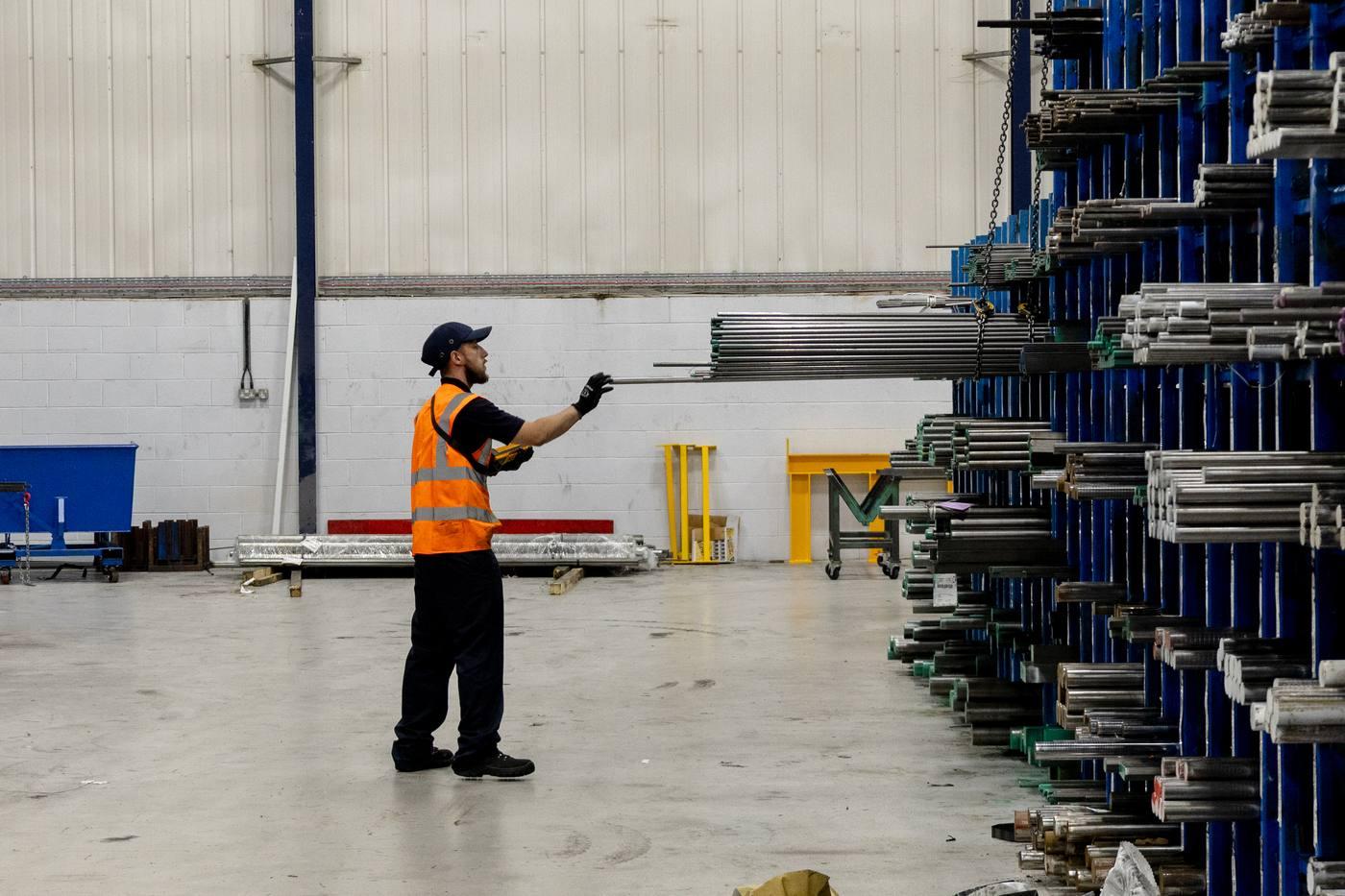
Operative picking engineering steel bar from cantilever racking — agricultural grade stock
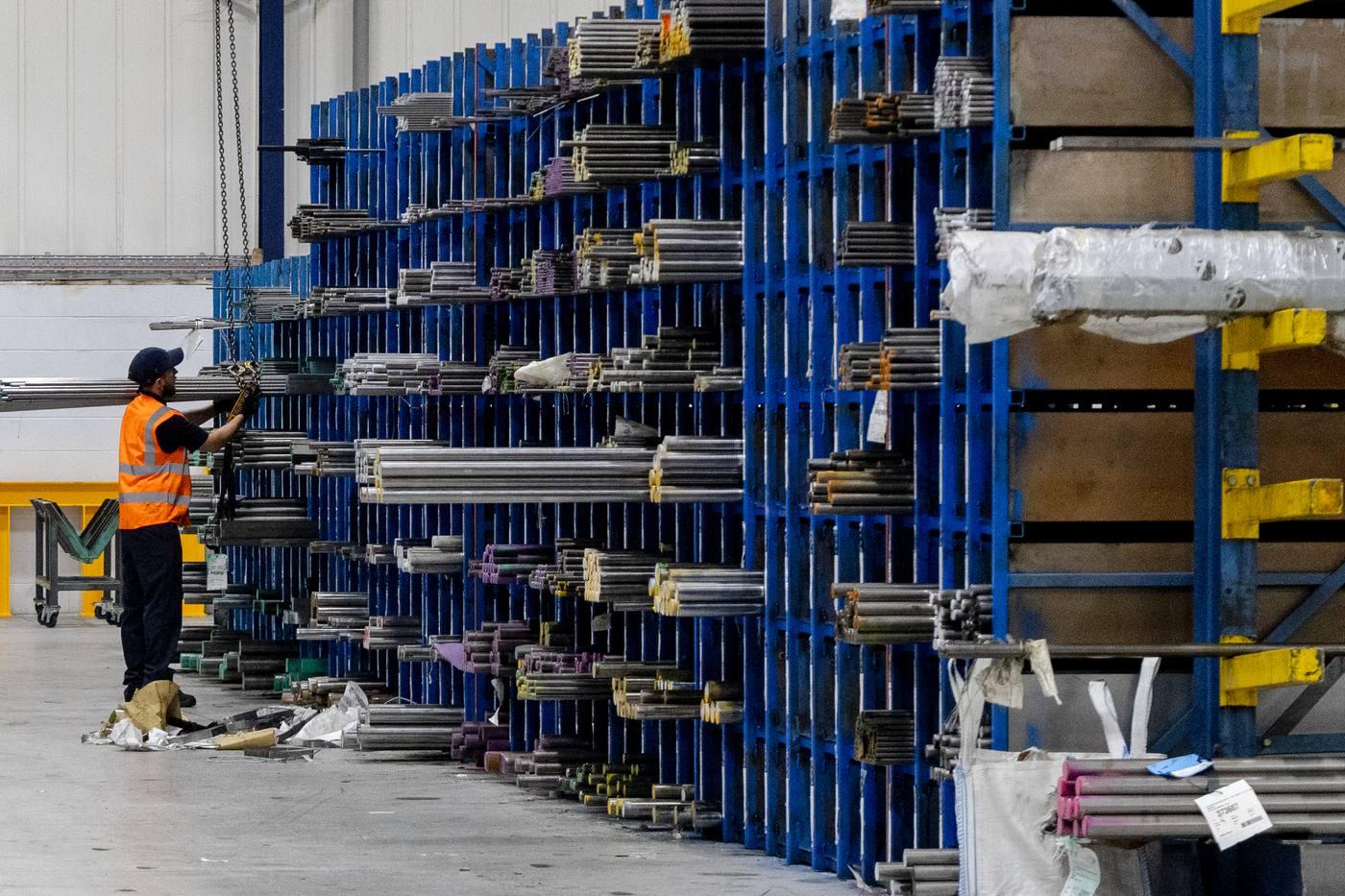
Full cantilever racking with agricultural engineering steel stock — Parkside Steel facility

Talk to Us About Your Agricultural Machinery Requirements.

No minimum order — cut to any length — same-day collection available. Our sales team understands engineering steel — not just the catalogue. Call with a grade, a component description, or a question.