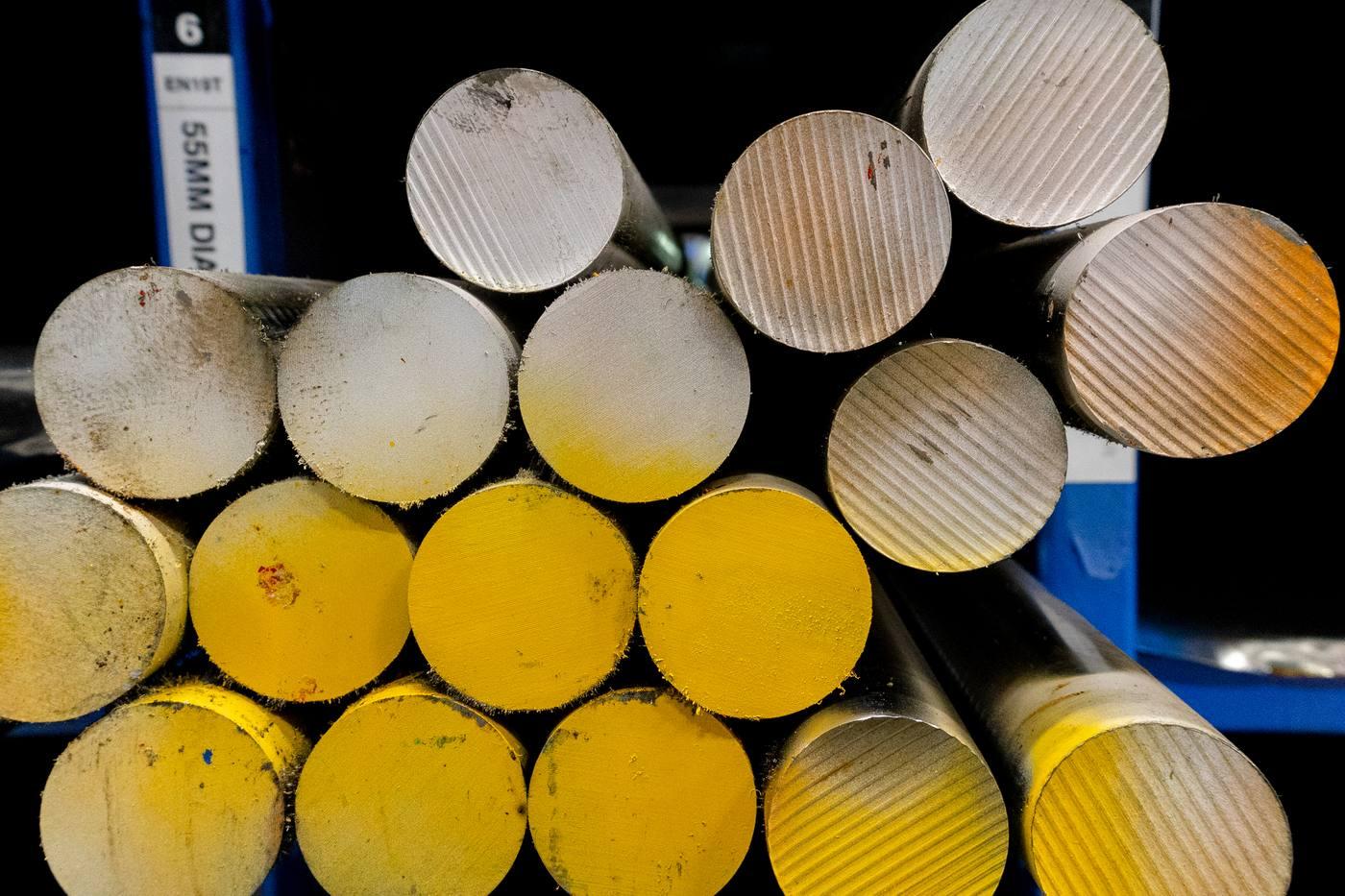
EN1A is the fastest-machining engineering steel you can buy. EN8 is the strongest standard carbon grade. Both are stocked as bright bar from 6mm upward. The question is which properties matter most for the component you are making — because you cannot have everything both grades offer simultaneously.
| Property | EN1A (230M07 / 11SMn30) | EN8 (080M40 / C40E) |
|---|---|---|
| Carbon content | 0.07–0.15% | 0.36–0.44% |
| Sulphur content | 0.25–0.35% (elevated — machining grade) | ≤0.050% (normal — standard grade) |
| Machinability rating | Excellent — 130–160% of AISI 1212 base | Good — 70–80% of AISI 1212 base |
| Surface finish achievable | Excellent — MnS inclusions lubricate tool face | Good |
| Chip formation | Short, manageable chips — ideal for automatic lathes | Longer chips — manageable |
| Tool life | Significantly longer | Standard |
| Tensile strength | 350–450 N/mm² | 550–700 N/mm² normalised |
| Hardness | 100–140 HB | 170–210 HB normalised |
| Impact toughness | Low — MnS inclusions reduce toughness | Moderate–good |
| Weldability | DO NOT WELD — hot cracking risk | Fair — preheat 150–250°C |
| Flame / induction hardenable | No — insufficient carbon | Yes — 50–55 HRC surface |
| Case hardenable | No — not suitable | Induction hardened surface only |
| Fatigue strength | Low — sulphides reduce fatigue life | Moderate–good |
| Standard (BS 970) | 230M07 | 080M40 |
| European designation | 11SMn30 / 1.0715 | C40E / 1.1186 |
| Colour code (bar end) | Green | White / None |
| Bright bar stocked | 3–150mm | 6–150mm |
In standard engineering steel, sulphur is an unwanted impurity — it reduces toughness and fatigue strength, and must be kept below 0.050%. EN1A deliberately raises sulphur to 0.25–0.35%. At this level, sulphur combines with manganese to form manganese sulphide (MnS) inclusions — elongated particles distributed throughout the microstructure that completely change how the steel behaves under a cutting tool.
The same sulphide inclusions that make EN1A so machinable are the source of its limitations. They reduce transverse toughness (the steel is significantly weaker in the direction perpendicular to the rolling direction), reduce fatigue life, and — critically — cause hot cracking during welding. When the weld pool solidifies, the low-melting-point iron sulphide phases at grain boundaries cause cracking as the metal contracts. EN1A must never be welded.
EN1A Pb (230M07Pb) adds lead for a further 25–35% improvement in cutting speed and surface finish on top of EN1A. If EN1A is fast, EN1A Pb is faster. The trade-offs are the same as EN1A, amplified by the additional restrictions on lead in some applications under REACH regulation.
EN8M (212A42) sits between the two — free-cutting sulphur content with EN8-level carbon. Good machinability with useful strength. EN8M data sheet ›
Never weld EN1A. This is not a caution — it is an absolute. The elevated sulphur causes hot cracking during weld solidification. A weld on EN1A may look sound but will be internally cracked or will fail under the first significant load. If a component needs to be both high-volume turned and welded, use EN3B mild steel — the machinability is lower but the weldability is excellent.
EN1A is not a substitute for EN8 in stressed applications. It is softer and significantly lower tensile. A shaft that was specified in EN8 for a reason should not be substituted with EN1A because it is easier to machine. The reasons for EN8 still apply.
Identifying EN1A vs EN8 in stock: bar-end colour codes — green = EN1A, white/none = EN8 — are the standard method. The spark test gives a very clear difference: EN1A produces dull, low-energy sparks (low carbon), EN8 produces brighter, more energetic sparks. Always verify against the delivery note or mill certificate for safety-critical applications.
EN1A, EN1A Pb and EN8 in bright round, hex and square bar. No minimum order. Cut to length. Certs available.