Grade Designations.
| BS 970:1991 (withdrawn) | 212A42 |
| Nearest DIN equivalent | 35S20 / 1.0726 |
| AISI/SAE | 1141 / 1144 |
| ISO | 35SPb20 |
Availability & Supply Condition.
Bright Rounds: 6–150mm | Hexagons: 10–65mm AF
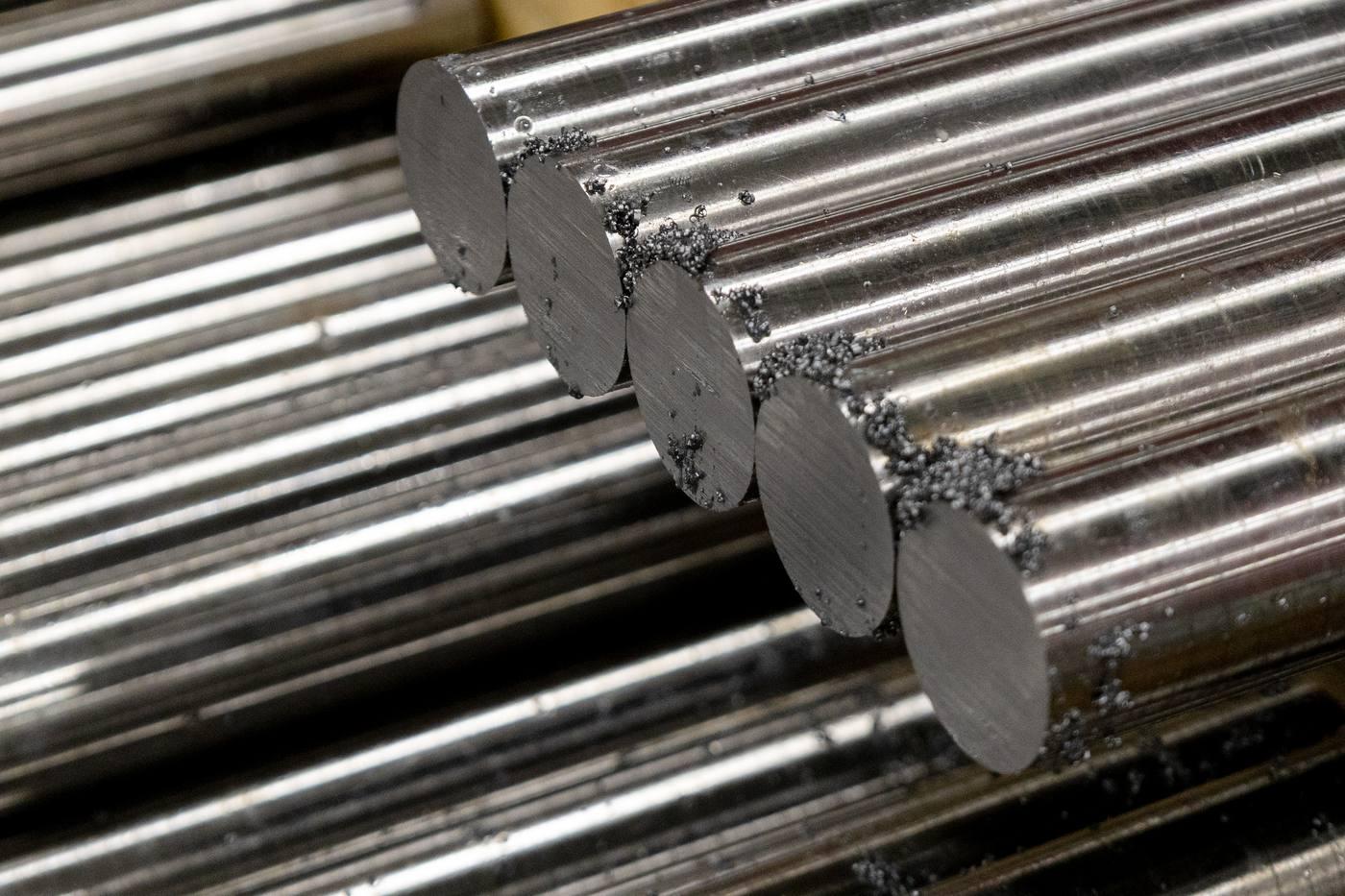
Supply condition: Bright Drawn. Supplied to chemical analysis.
Cut to length from 1 piece — −0/+2mm standard tolerance — 2–3 day turnaround — Cutting service details ›
Chemical Analysis.
Values shown as percentages by weight (% wt). Values are ranges unless stated as maxima.
| Designation | C | Si | Mn | P max | S |
|---|---|---|---|---|---|
| 212A42 | 0.38–0.46 | 0.10–0.40 | 1.00–1.40 | 0.07 | 0.20–0.30 |
For full chemical analysis with heat number, request an EN 10204 3.1 material test certificate when ordering — available on all alloy grades. Certificate types explained ›
Mechanical Properties.
Values shown for standard supply condition. Properties vary by section size and heat treatment condition.
| Condition | Tensile Rm (N/mm²) approx | Hardness HB approx |
|---|---|---|
| Bright Drawn | ~550–700 | ~163–207 |
Hardness values: see our hardness conversion table to convert between HRC, HB, HV and tensile strength.
Typical Applications.
- High-volume automatic turning — bolts, nuts, fasteners
- Hydraulic fittings requiring some strength
- Automotive components on CNC lathes
- Instrument and general turned components
Key Benefits.
- Better machinability than EN8 due to elevated sulphur
- Better strength than EN1A due to higher carbon
- Good chip breaking on automatic and CNC lathes
- Improved surface finish on turned faces
Remarks & Guidance.
Welding should be avoided due to elevated sulphur. Not suitable for impact loading or applications requiring high fatigue strength — sulphide inclusions reduce transverse ductility. Where the EN8 tensile certificate is required, specify 080M40 (EN8) instead.