EN8 and mild steel look identical on the shelf and machine similarly — but their mechanical properties, weldability and heat treatment response are significantly different. Choosing between them is one of the most common grade decisions in UK engineering. This page explains every difference that matters, in plain English.
| Property | EN8 (080M40 / C40E) | Mild Steel (EN3B / 070M20 / C22E) |
|---|---|---|
| Carbon content | 0.36–0.44% | 0.17–0.23% |
| Type | Medium carbon steel | Low carbon (mild) steel |
| Tensile strength (normalised) | 550–700 N/mm² | 350–450 N/mm² |
| Yield strength (approx) | 340–420 N/mm² | 210–275 N/mm² |
| Hardness (normalised) | 170–210 HB | 120–160 HB |
| Flame / induction hardenable | Yes — 50–55 HRC surface | No — insufficient carbon |
| Through hardenable | Yes (sections ≤40mm) | No |
| Weldability | Fair — preheat 150–250°C required | Excellent — no preheat on most sections |
| Machinability (bright, normalised) | Good | Very good — lower carbon cuts easier |
| Fatigue resistance | Moderate–good | Low–moderate |
| Cost | Slightly higher | Lower |
| Standard (BS 970) | 080M40 | 070M20 |
| European equivalent | C40E / 1.1186 | C22E / 1.1151 |
| AISI equivalent | AISI 1040 | AISI 1020 |
| Bright bar range | 6–150mm | 3–100mm |
Carbon is the primary strengthening element in steel. EN8 contains 0.36–0.44% carbon. Mild steel (EN3B) contains 0.17–0.23% carbon. That difference of roughly 0.20% sounds small but has a large practical effect: EN8 is approximately 35–50% stronger than mild steel in the normalised condition, and it can be hardened by heat treatment where mild steel cannot.
The carbon difference also affects weldability in the opposite direction. Higher carbon steels are more susceptible to hydrogen-induced cold cracking in the heat-affected zone when welded. Mild steel welds freely with standard procedures on sections up to about 25mm without preheat. EN8 requires preheating to 150–250°C, maintaining interpass temperature, and slow post-weld cooling to avoid cracking — especially on heavier sections.
Unsure? Call our team with the application and we will recommend the right grade. 01623 687 660 • Mon–Fri 08:00–17:00
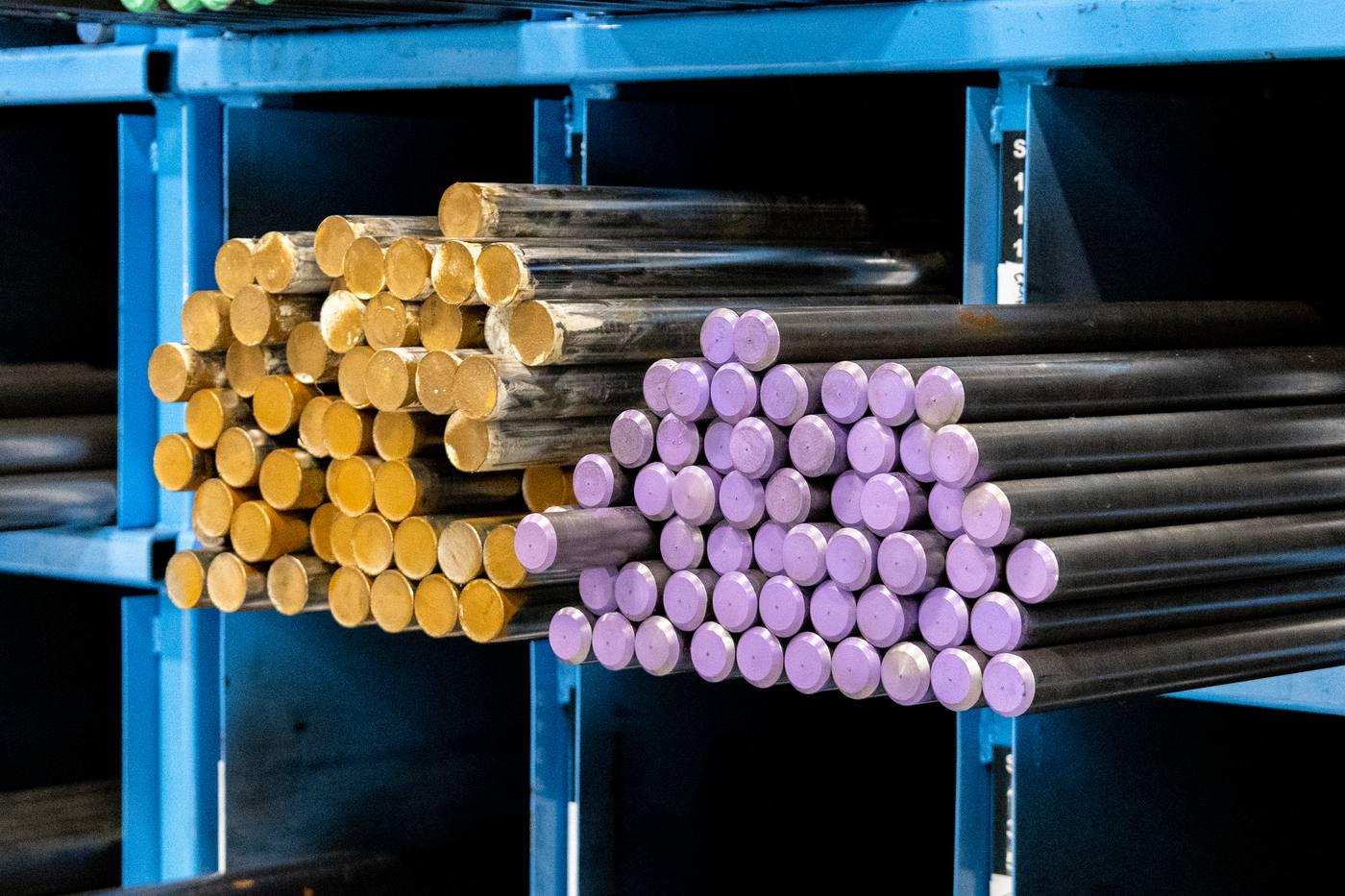
Using mild steel where EN8 is needed: the most common failure mode is a mild steel shaft or stud that deforms plastically or fails in fatigue because the higher tensile strength of EN8 was required but not specified. Mild steel looks identical to EN8 bright bar until it is tested. Bar-end colour codes help (green = mild/EN3B; white = EN8) but are not reliable as the sole identification method.
Using EN8 where mild steel is needed for welding: an EN8 component welded without preheat will develop hydrogen-induced cracking in the heat-affected zone — sometimes immediately, sometimes hours or days after welding (delayed cracking). The weld may look sound but be cracked internally. If the design requires welding, use EN3B unless you can guarantee the correct EN8 welding procedure is followed every time.
EN8 and EN3B mild steel bright bar from 3mm. No minimum order. Call or request a quote online.