EN8 and EN19 are the two most widely used engineering steel grades in the UK. Understanding when to choose one over the other saves money, prevents failures and avoids over-engineering. This page explains every difference that matters.
| Property | EN8 (080M40 / C40E) | EN19 (708M40 / 42CrMo4) |
|---|---|---|
| Carbon content | 0.36–0.44% | 0.35–0.45% |
| Alloy additions | None (unalloyed) | Cr 0.90–1.20%, Mo 0.15–0.40% |
| Tensile strength (normalised) | 550–700 N/mm² | ~850 N/mm² |
| Tensile strength (Q+T) | ~700–900 N/mm² | 900–1200 N/mm² |
| Through-hardening section | ~40mm reliable | ~65mm reliable |
| Surface hardness (flame/induction) | 50–55 HRC | 52–58 HRC |
| Machinability (normalised) | Good | Good (slightly harder) |
| Weldability | Fair — preheat 150–250°C | Difficult — preheat 200–300°C + PWHT |
| Fatigue resistance | Moderate | Good — Cr-Mo improves fatigue life |
| Relative cost | Lower | Higher (alloy premium) |
| International equivalents | C40E, AISI 1040, DIN C40 | 42CrMo4, AISI 4140, SCM440 |
| British Standard No. | BS 970: 080M40 | BS 970: 708M40 |
| Bright bar range | 6–150mm | 6–150mm |
| Black bar range | 16–250mm | 20–300mm |
| 3.1 cert available | Yes | Yes |
The single most important practical difference between EN8 and EN19 is hardenability — the ability of the steel to harden through a cross-section when quenched. This is where the chromium and molybdenum in EN19 do their most important work.
This means for a 50mm diameter shaft: EN8 will have a soft core after hardening, EN19 will be uniform through the section. For applications where a 50mm shaft must be through-hardened and have consistent properties centre-to-surface, EN19 is the correct grade.
For shafts under 40mm where full through-hardening is not required, EN8 is adequate and cheaper. The rule of thumb: if your section exceeds 40mm and you need reliable through-hardening, move from EN8 to EN19.
Not sure? Call our sales team with the diameter, required tensile and application — we will recommend the correct grade. 01623 687 660
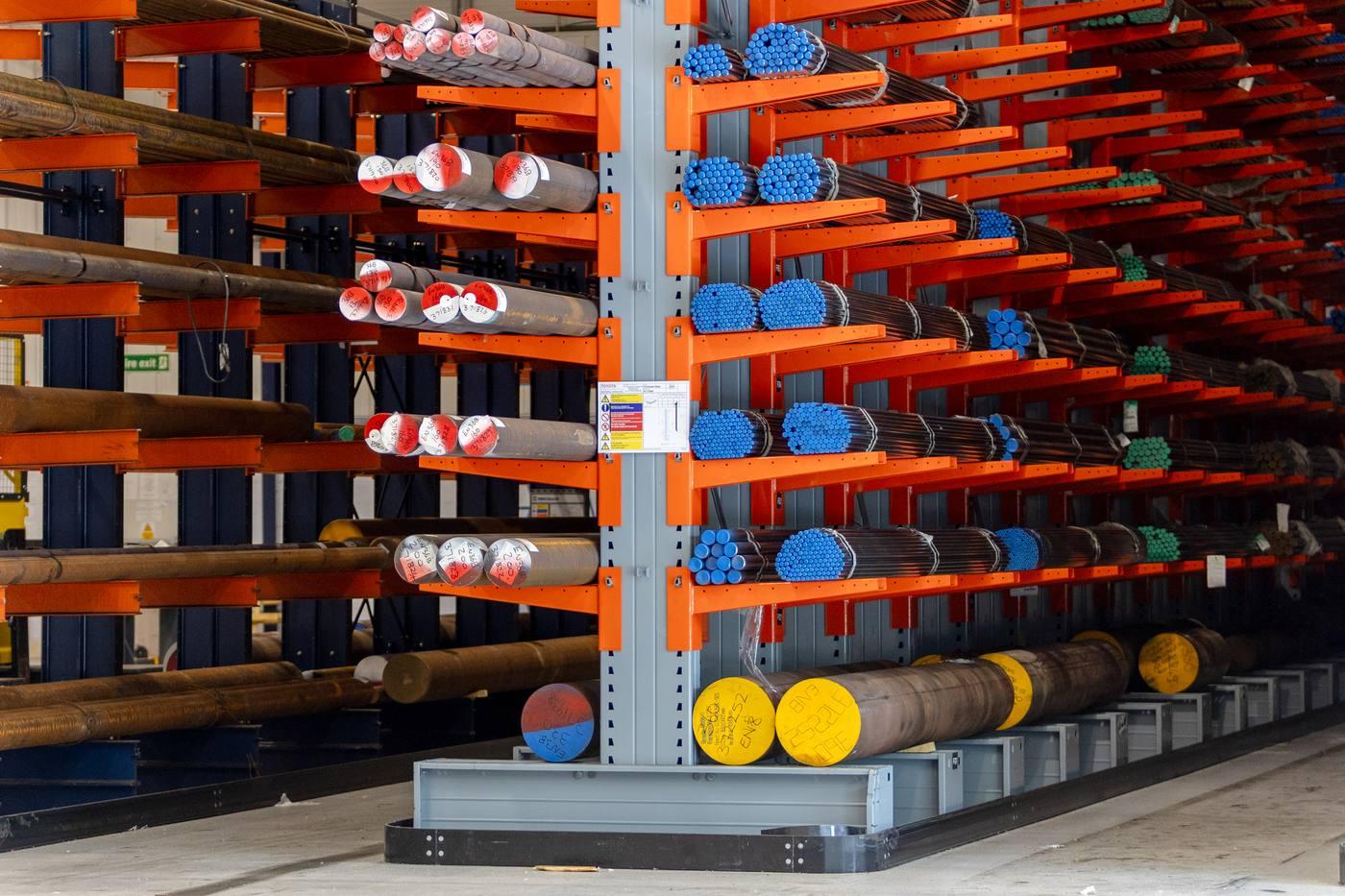
EN8 and EN19 in stock as bright bar, black bar, hexagon and square. Cut to length from one piece. 3.1 certs available.